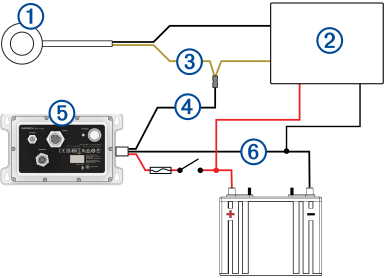
Close-to-Stop Wiring Connections
For a close-to-stop kill switch, the circuit to the engine or engines from the kill switch is normally open and any signal that closes the circuit causes the engine to stop. This is the most commonly-used type of kill switch and is typically found on vessels with outboard engines.
|
Item |
Description |
Notes |
|---|---|---|
|
|
Existing kill switch |
|
|
|
Engine or engines |
|
|
|
Kill switch signal wire |
|
|
|
White close-to-stop wire from the GOS™ 10 hub wiring harness |
In most installations, you only need to connect the white wire from the wiring harness to the positive wire from the existing kill switch by either using a marine-grade tap splice connector (not included), or by cutting the kill switch wire and connecting both cut ends of the kill switch wire and the white wire from the wiring harness using solder and heat shrink tubing. By splicing the kill switch signal wire from the GOS 10 hub in this manner, it allows the system to close the circuit and kill the engine. This preserves the functionality of the existing kill switch. If your vessel does not have an existing kill switch, you can connect these wires to the ignition signal wire instead (Connections for Vessels Without an Existing Kill Switch). |
|
|
GOS 10 hub |
|
|
|
Ground wire from the GOS 10 hub wiring harness |
You must connect the ground wire from the GOS 10 hub to the same ground location as the engine for the engine cutoff system to function properly. |