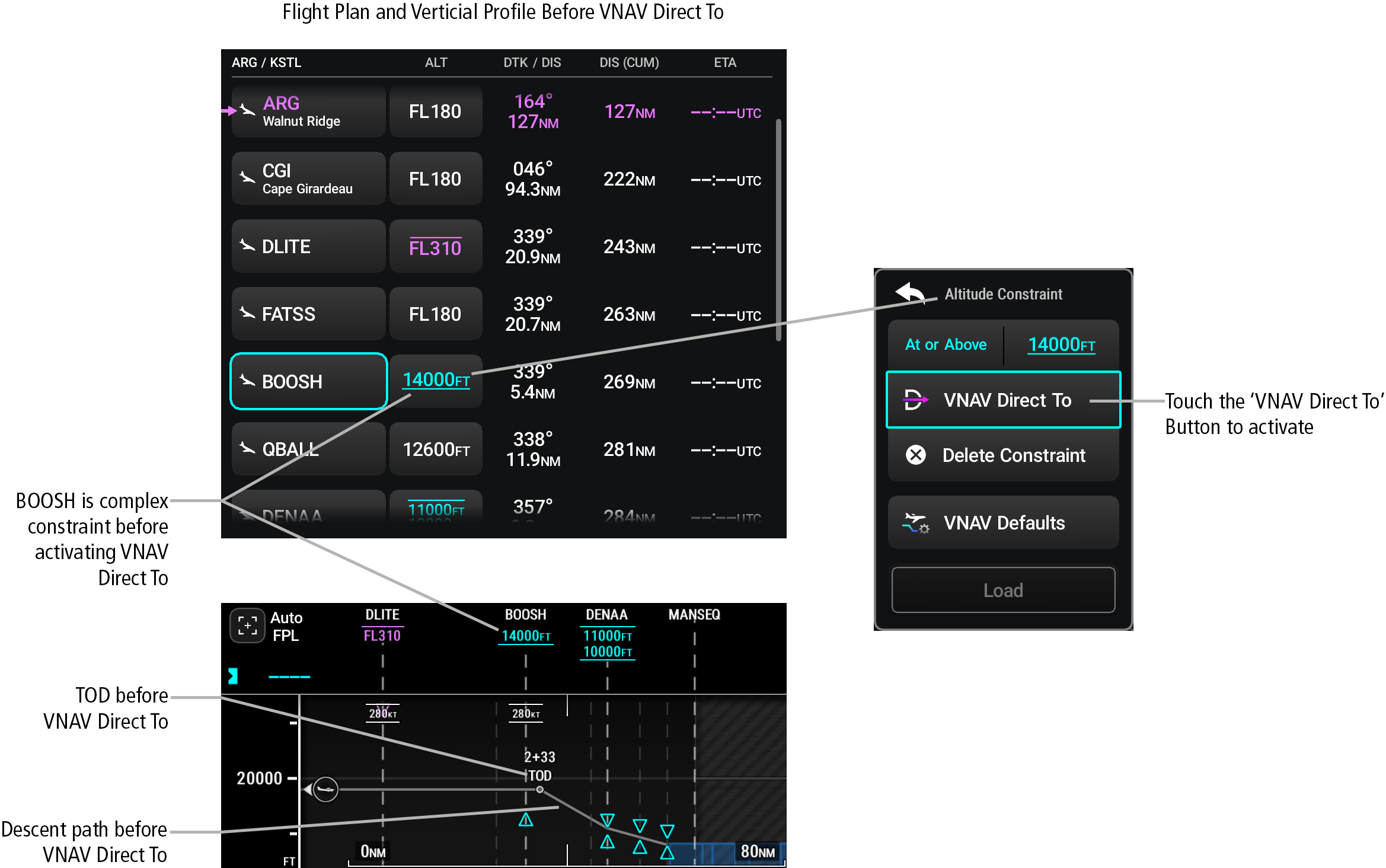
VNAV Direct-To
-
Descent with complex active VNAV constraint: VNAV Direct-to is selected for the active VNAV waypoint and the active VNAV waypoint is a complex altitude constraint. Initiating the VNAV direct-to shall create a vertical profile beginning in front of the aircraft at its present position. The complex altitude constraint of the active leg shall be maintained, and a vertical profile based on a flight path angle from the present position to the next AT constraint shall be complied with. This behavior can be activated by touching the VNAV Direct To Button and then selecting the first option listed on the 'Select VNAV Direct To' Window (this option will display the complex altitude constraint).
-
Descent to a constraint at a waypoint (constraints before waypoint are removed): VNAV Direct-to is selected for a descent altitude constraint in the flight plan. Initiating the VNAV direct-to shall create a vertical profile beginning in front of the aircraft at its present position. The selected altitude constraint is converted to an AT constraint. All altitude constraints before the selected constraint are removed from the flight plan to allow for a continuous descent profile to the waypoint of the selected altitude constraint.
The system allows a vertical navigation (VNAV) direct-to for any waypoint in the active flight plan with an altitude descent constraint designated (cyan text) for vertical guidance. Initiating the VNAV direct-to allows the flight plan to be flown, while vertical guidance based on the altitude constraint at the VNAV direct-to waypoint is provided. The altitude change begins on the current leg and is spread along the flight plan from current position to the vertical direct-to waypoint, not just along the leg for the direct-to waypoint. A TOD point is computed based on this altitude change; guidance for descent begins once the TOD is reached.
Once VNAV direct-to is activated, all VNAV altitude constraints before the VNAV direct-to waypoint are removed from the active flight plan. All VNAV altitude constraints following the VNAV direct-to waypoint are retained.