Installation and Setup
 CAUTION
To ensure proper setup and best performance, it is strongly recommended that you complete the first time installation and setup at a dive shop. You should fully test the transmitter installation above and below water before using it during a dive.
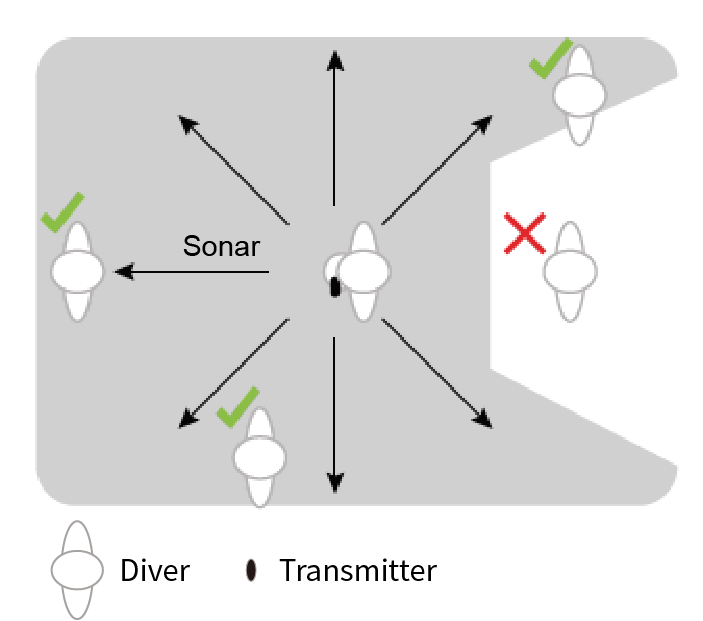
The transmitter communicates wirelessly with your compatible dive computer. On the surface, it uses ANT® technology. Underwater, it uses a sonar signal. Your body, drysuit, and dive equipment can obstruct the signal, particularly while underwater. For the best reception, all transmitters in your group should have clear lines of sight to the dive computer. To help prevent blocking the signal with your body or equipment, you should follow these tips.
- You should install the transmitter at least 7 cm (3 in.) from your body.
- You should install the transmitter on the same side of the tank as the wrist wearing your dive computer. For example, if you wear your dive computer on your left wrist, you should install the transmitter on the left side of the tank regulator.
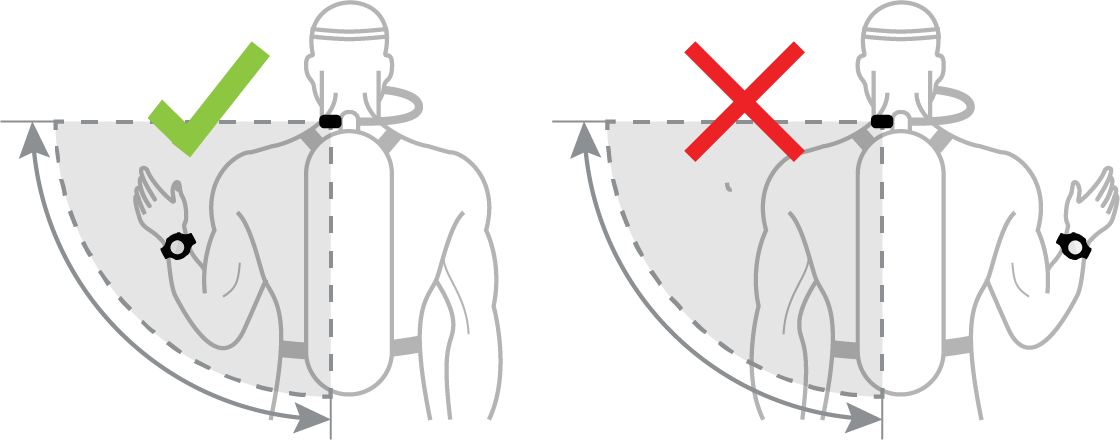
- For the best reception, you should wear the tank high on your back. This allows the transmitter to have a clear line of sight over your shoulders.
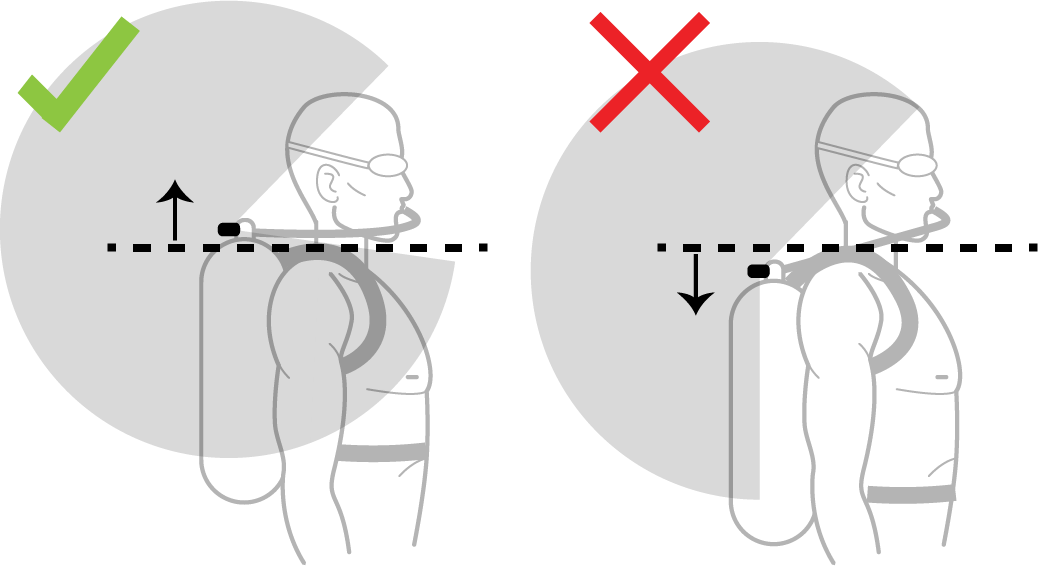
- If you wear your tank inverted with the regulator at the bottom, you can use a high-pressure hose to relocate the transmitter to have a clear line of sight over your shoulders.
- If you lose the signal from your transmitter, you should move your arm until the signal is restored.
- If you lose the signal from another diver, you should change your body position until the signal is restored. If your body is between the dive computer and another diver, it may obstruct the signal from that diver’s transmitter.
Installing the Transmitter on Your Tank Regulator
WARNING
Always use the pre-installed flow restrictor when using the transmitter directly attached to your regulator. Always use the included air spool when connecting the transmitter to a high pressure hose extension (Installing the Transmitter on a High Pressure Hose Extension). Using the transmitter without either the flow restrictor or air spool could result in serious injury or death from an air pressurization failure.
Before you install the transmitter on your tank regulator, you should read the transmitter position tips and choose the port position that provides the best line of sight to the dive computer.
To install the transmitter, you need a 5/8 in. (16 mm) open-ended wrench.
The transmitter connects to a high pressure output port of the first-stage regulator.
- Confirm the regulator is depressurized and detached from a scuba cylinder.
- Remove the port plug from the high pressure output port of the first-stage regulator.
- Confirm the flow restrictor is installed in the transmitter.
- Screw the transmitter onto the high pressure output port until you feel resistance.
 WARNING
Verify the installed transmitter does not physically interfere with any hoses or other tank assemblies.
- Use a 5/8 in. (16 mm) wrench to tighten the transmitter.

NOTICE
To prevent damage to the transmitter and possible loss of function, do not overtighten. Do not use the transmitter housing to tighten or loosen the transmitter.Do not grip the regulator or the transmitter to move, carry, or adjust the tank.
Installing the Transmitter on a High Pressure Hose Extension
WARNING
Always use the pre-installed flow restrictor when using the transmitter directly attached to your regulator (Installing the Transmitter on Your Tank Regulator). Always use the included air spool when connecting the transmitter to a high pressure hose extension. Using the transmitter without either the flow restrictor or air spool could result in serious injury or death from an air pressurization failure.
Before you install the transmitter on a high pressure hose extension certified to the EN 250:2014 standard, you should read the transmitter position tips and choose a position that provides the best line of sight to the dive computer.
To install the transmitter, you need two 5/8 in. (16 mm) open-ended wrenches and a small flat screwdriver or flat-nose pliers.
The transmitter can connect to a high pressure hose extension from the high pressure output port of the first-stage regulator.
- Use a screwdriver or pliers to carefully remove the flow restrictor
 from the transmitter.
NOTICE
Use care when removing the flow restrictor to avoid damaging the device.
- Insert the large end of the air spool
 into the transmitter.
- Confirm the regulator is depressurized and detached from a scuba cylinder.
- Remove the port plug from the high pressure output port of the first-stage regulator.
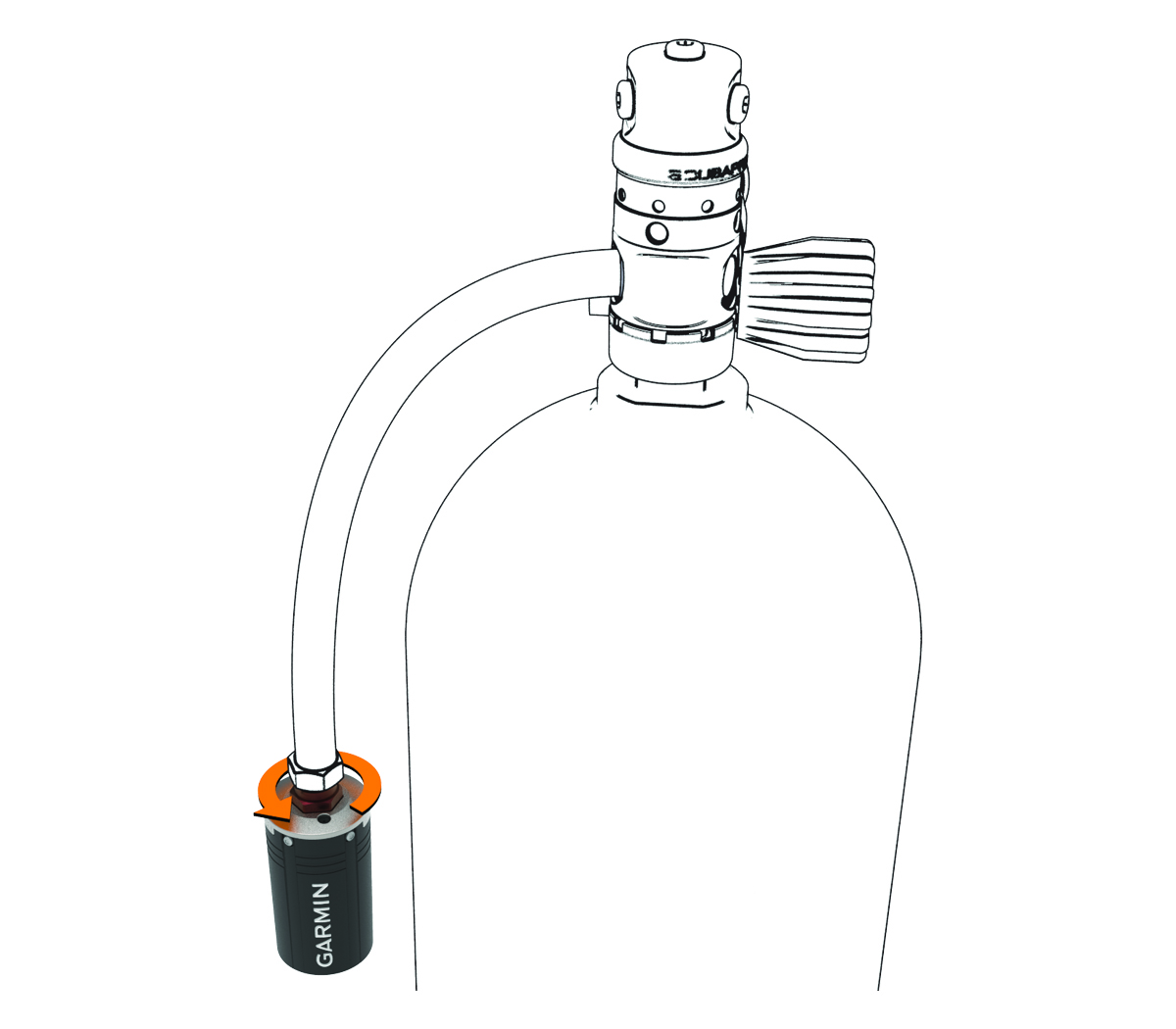
- Connect a high pressure hose extension to the high pressure output port of the first-stage regulator.
- Screw the transmitter onto the high pressure hose extension until you feel resistance.
 WARNING
Verify the installed transmitter does not physically interfere with any hoses or other tank assemblies.
- Use two 5/8 in. (16 mm) wrenches to tighten the transmitter, placing one wrench on the transmitter and one wrench on the hose fitting.

NOTICE
To prevent damage to the transmitter and possible loss of function, do not overtighten. Do not use the transmitter housing to tighten or loosen the transmitter. Do not grip the regulator or the transmitter to move, carry, or adjust the tank.
- Ensure the connection between the transmitter and hose fitting is secure before using the device.
You must remove the air spool and reinstall the flow restrictor before installing the transmitter on your tank regulator.